
Creatine has been studied more thoroughly than almost anything else on the supplement shelf. Three decades of trials, some running for years, in people from teenage athletes to adults in their seventies.
It still has a reputation for wrecking your kidneys, thinning your hair, and leaving you cramped and bloated.
Most of that reputation traces back to a handful of studies that were either misread or never repeated. Some of it is real but harmless. And a couple of the effects that genuinely matter are ones nobody warns you about. Here is each claim against what the research actually found.
Does creatine cause hair loss?
This is the most searched creatine question by a distance, and the answer is more interesting than a flat yes or no.
It comes from one study, published in 2009, on college rugby players. After three weeks of creatine, participants showed a rise in DHT, a hormone linked to male pattern baldness in people genetically predisposed to it. That is the entire evidentiary foundation.
Two details matter enormously. The study had 20 participants. And it measured a hormone, not hair. Nobody in it lost any.
In the years since, that DHT result has not been replicated. Reviews looking specifically at creatine and hair have not found evidence it causes hair loss, and no trial has ever recorded hair loss as an outcome.
So, honestly: there is no good evidence that creatine causes hair loss, and the study everyone cites did not measure hair loss. If you are already predisposed to male pattern baldness, the theoretical mechanism is not zero, and nobody can promise you otherwise. But twenty rugby players and one unreplicated hormone reading is a thin foundation for a reputation this large.
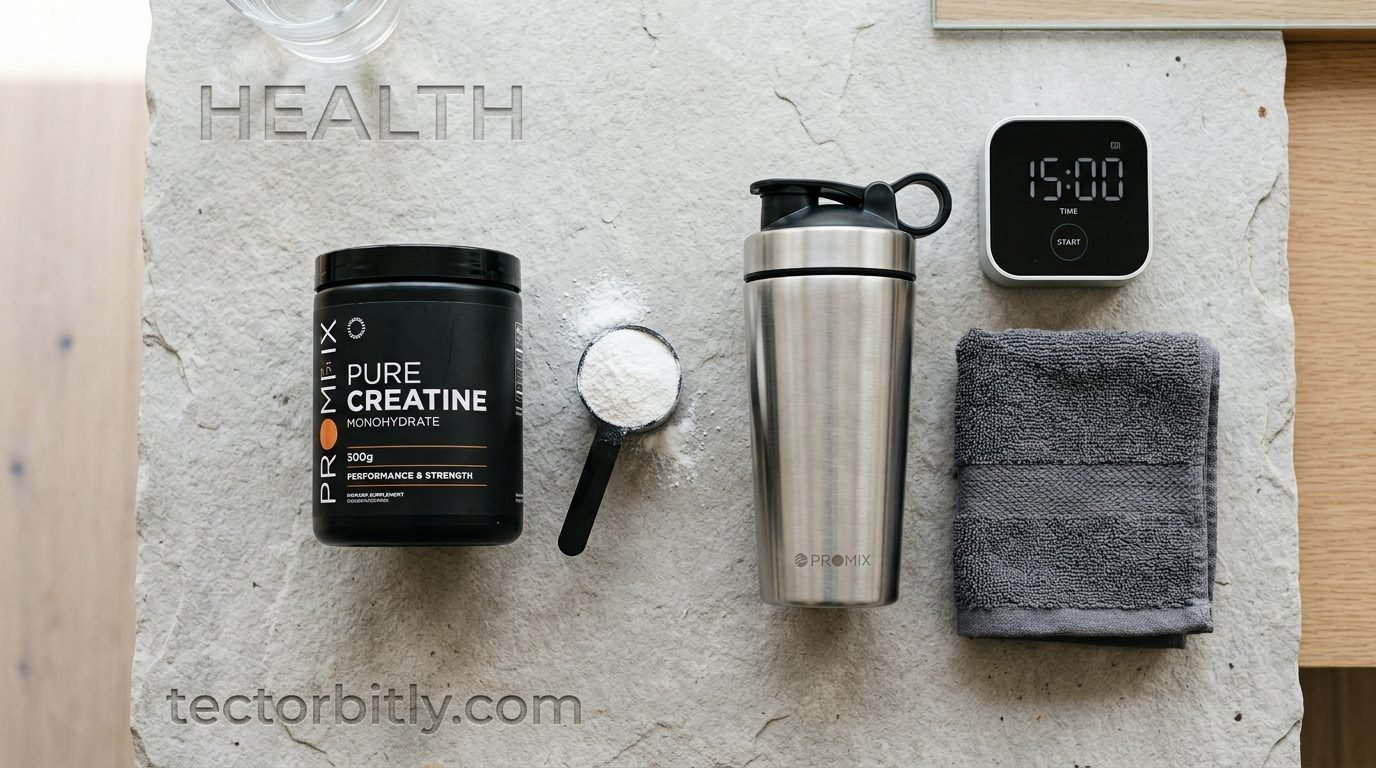
!Creatine powder measured into a scoop beside a shaker bottle
The weight gain is real, and it is not fat
This one is true, and it is the effect most likely to make people quit inside a fortnight.
Expect one to two kilograms in the first couple of weeks. Creatine pulls water into your muscle cells, and water weighs something.
Where that water goes is the part that matters. It is intracellular, inside the muscle, not under the skin. It does not create the soft, puffy look people picture. If anything it does the reverse, because the muscle itself is fuller.
Any further weight gain over months tends to be actual lean mass, from training harder rather than from the creatine.
If you weigh yourself daily, brace for it. Otherwise you will watch the scale jump in week one and draw entirely the wrong conclusion.
Bloating, stomach upset, and how long they last
Here is where most of the genuine discomfort lives, and almost all of it belongs to the loading phase.
How long does the bloating last?
The initial water shift settles within about one to two weeks as your muscles reach saturation and your body adjusts. Loading-related bloating clears faster than that: drop from 20 grams a day to a normal 3 to 5 gram dose and it usually resolves within a few days.
If it has not improved after a couple of weeks at a maintenance dose, creatine probably is not what is causing it.
Diarrhea and stomach upset
This is dose-dependent, and the mechanism is simple. Creatine your gut cannot absorb in one hit stays in the intestine and draws water in with it. Take too much at once and you get the predictable result.
Three fixes, in order of how well they work. Split the dose across the day rather than swallowing it all at once. Take each dose with food. And if it still bothers you, skip loading altogether, because you reach identical saturation in three to four weeks instead of one with none of the discomfort. Our guide to creatine timing covers that trade-off properly.
Cramps and dehydration: the myth that outlived its evidence
For years the standard warning was that creatine causes cramping and dehydration, and athletes were told to be careful training in heat.
The research went looking and did not find it.
Trials and reviews, including studies on athletes exercising in hot conditions where the problem should be most obvious, have not found higher rates of cramping, dehydration or heat illness in people taking creatine. Some data point mildly the other way, on the reasoning that more water held inside muscle cells is not an obvious hydration disadvantage.
The warning has simply outlasted the evidence for it, the way sports advice often does. Drink normally, train normally — and if you want the detail on what "normally" means, how much water you actually need covers why there is no fixed litre count that comes with the scoop. The related belief that electrolytes prevent cramps has held up about as well.
Does creatine damage your kidneys?
In healthy people, the evidence says no.
This is among the most examined questions in supplement research, precisely because the fear is so widespread. Long-term studies, including trials running several years, have not found kidney damage in healthy adults at normal doses.
The fear does have an understandable origin, though.
The blood test problem nobody warns you about
Creatine breaks down into creatinine. Creatinine in your blood is the standard marker doctors use to judge kidney function. Take creatine, and your creatinine reading goes up.
But that raised number reflects more creatine moving through your system, not a kidney working badly. The marker moves without the thing it is measuring having changed.
Which leads to the single most practical line on this page: tell your doctor you take creatine before any blood work. An elevated creatinine result with no context can launch a kidney investigation that was never needed. It costs you two seconds and saves a great deal of worry.
If you already have kidney disease, that is a conversation for your doctor, not an article.
Liver, blood pressure and heart
Grouped together because the answer is the same for all three: no good evidence of harm in healthy people at normal doses.
The liver concern is largely borrowed from the kidney concern rather than arising from findings of its own. Blood pressure studies have not shown a meaningful effect. And creatine is not associated with cardiac harm in healthy adults. If anything the research interest around the heart runs in the opposite direction, though that work is early and not a reason to take anything.
Creatine and alcohol
There is no established dangerous interaction between creatine and alcohol. You do not need to skip your dose because you are having a drink.
What alcohol does do is work against the reason you are taking creatine in the first place. It impairs muscle protein synthesis, blunts recovery, and acts as a mild diuretic, pulling in roughly the opposite direction to a supplement whose whole mechanism involves holding water inside muscle cells.
So the honest framing is not "dangerous combination". It is "these two are not helping each other". Take your creatine as normal. The drinking is a separate conversation about training results.
Acne, testosterone and anxiety
Three worries with one thing in common: no research establishing any of them.
Acne has no demonstrated link to creatine. The proposed mechanism is the DHT hypothesis from the hair loss section, carrying the same weakness, an unreplicated hormone finding applied to an outcome nobody measured.
Testosterone is not meaningfully raised by creatine. It is not a hormonal supplement and does not behave like one.
Anxiety has no evidence of being caused by creatine. Research interest actually runs the other way, since creatine has been examined as an adjunct in mood disorders, but that work is limited and unsettled and it would be overselling it to call it a benefit.
What long-term use actually looks like
Studies have followed people taking creatine daily for years without finding adverse effects in healthy adults. It has one of the better safety records in the supplement aisle, largely because researchers have spent thirty years actively looking for problems.
You do not need to cycle off. Your body reduces its own production while you supplement and resumes normally when you stop, and there is no evidence that pausing improves anything.
Who should actually be careful
Most of this page is reassurance. This part is not.
Speak to a doctor before starting if you have existing kidney disease or reduced kidney function, or if you take medication that affects the kidneys.
If you are pregnant or breastfeeding, the standard advice is to avoid it. Not because harm has been demonstrated, but because the research has not been done. Absence of evidence is not the same as evidence of safety, and pregnancy is the wrong place to gamble on the difference.
For teenagers, creatine is generally considered safe at sensible doses, but the data is thinner than it is for adults. Worth a conversation rather than a decision made alone.
The summary
Creatine's side effect profile is unusually mild, and the effects people fear most are the ones with the weakest evidence behind them. Hair loss rests on one small study that measured a hormone. Cramps and dehydration were investigated and not found. Acne, testosterone and anxiety have nothing behind them at all.
What is real: water weight in the first fortnight, stomach trouble if you load too aggressively, and a blood test that will read strangely unless you mention it.
That last one is the only item here with an action attached. Mention it before your next blood test.
---
This article is general information, not medical advice. Talk to your doctor before starting creatine if you have a health condition, take prescription medication, or are pregnant or breastfeeding.



0 comments
No comments yet. Be the first to weigh in.