
Electrolyte powders went from a thing endurance athletes carried to a thing sold at supermarket checkouts, and the marketing did not bring the evidence with it.
For most people on most days, the answer is no. Plain water and ordinary food cover it. But there are specific situations where electrolytes stop being marketing and start mattering quite a lot, and knowing which is which saves both money and, occasionally, a genuinely bad afternoon.
General information, not medical advice. Kidney disease, heart failure, and medications including diuretics and lithium all change electrolyte requirements significantly — talk to your doctor before supplementing.
What electrolytes actually do
Electrolytes are minerals that carry an electrical charge when dissolved: sodium, potassium, chloride, magnesium and calcium, mainly.
They do two jobs that matter here. Sodium controls where water sits in your body — it is what holds fluid in the space outside your cells, which is why concentration matters more than volume. And potassium does the equivalent job inside cells, with the two working against each other across every cell membrane to drive nerve signals and muscle contraction.
That is the whole mechanism behind everything below. Drinking water does not just add water; it dilutes what is already dissolved. Usually your kidneys correct that within minutes. The exceptions are what this article is about.
Electrolytes vs water: when plain water is enough
Plain water is enough whenever your losses are small enough for food to replace.
A normal Western diet contains far more sodium than anyone needs — most people are trying to reduce it, not top it up. Potassium comes from fruit, vegetables, beans and potatoes. Magnesium from nuts, wholegrains and leafy greens. If you are eating meals and sweating normally, the deficit an electrolyte drink is supposed to fix does not exist.
This matches what the drinks actually do under measurement. In the trial behind the beverage hydration index, a sports drink produced urine output no different from plain water. The one drink in that study that clearly beat water on retention was an oral rehydration solution — a genuinely different formulation, discussed below — and, oddly, milk.
So the question is not "are electrolytes good". It is "am I in one of the situations where my losses have outrun my dinner".
When you actually need electrolytes
Long or heavy sweating
This is the real one. Sweat contains sodium, and over hours the losses become substantial rather than trivial.
The American College of Sports Medicine's position stand on exercise and fluid replacement is blunt about the individual variation: there is "considerable variability in sweating rates and sweat electrolyte content between individuals", so it recommends customised replacement rather than a universal number. Sweat sodium concentration varies several-fold between two people doing identical work in the same room.
The practical threshold most people can use: under an hour, water is fine. Beyond that, or in heat, sodium starts to matter. For runners and for long rides, the failure mode is not thirst — it is drinking plenty of plain water across four hours while replacing none of the salt, which is the setup for the overhydration problem further down.
To find your own rate rather than guessing, use the method the ACSM recommends: weigh yourself before and after a session. Each kilogram lost is roughly a litre of sweat. Losing more than about 2 percent of body weight is the point at which performance measurably suffers.
Hot yoga and saunas
Both cause losses that are easy to underestimate. In a sauna you are barely moving, so nothing feels like exertion. In hot yoga the sweat runs off rather than evaporating, so you cannot judge volume by how damp you feel.
A ninety-minute hot class can cost well over a litre. If you do this several times a week and drink only plain water afterwards, adding sodium back is reasonable. Once a fortnight, it is not worth the sachet.
Illness, fever and stomach bugs
This is the situation where electrolytes are genuinely medicine rather than lifestyle. Vomiting and diarrhoea lose fluid and sodium together, fast, and plain water replaces only half of that.
The World Health Organization treats oral rehydration solution as the frontline treatment for diarrhoeal illness — it describes it simply as a solution of clean water, sugar and salt, and it has saved an enormous number of lives. A fever raises fluid losses too, through faster breathing and sweating, though less dramatically.
Use a proper ORS sachet from a pharmacy, not a sports drink. For a child, for anyone elderly, or for anything lasting more than a day or two, this is a see-a-doctor situation rather than a manage-it-yourself one.
Keto and low-carb diets
Cutting carbohydrate drops insulin, and lower insulin tells the kidneys to excrete sodium rather than retain it. You also shed the water that was stored alongside muscle glycogen. Both happen in the first week.
That is the actual mechanism behind "keto flu" — the headaches, light-headedness and flatness people report early on are substantially a sodium deficit, not carbohydrate withdrawal. This is one of the few cases where deliberately adding salt is the correct move rather than a supplement-industry invention.
Fasting
The same logic, for the same reason. During an extended fast you are taking in no sodium at all while continuing to excrete it, and if you are also drinking a lot of water you accelerate the loss. Short overnight-style fasts are irrelevant here; multi-day fasting is not, and should be medically supervised anyway.
Hangovers
Partly justified. Alcohol suppresses vasopressin, so you lose more fluid than the drinks provided, and vomiting adds sodium loss on top.
But dehydration is only one component of a hangover — acetaldehyde, inflammation and disrupted sleep do most of the damage, and no electrolyte drink touches those. An ORS will make you feel somewhat better than plain water. It will not make the morning pleasant.
Flying, altitude and night shifts
Aircraft cabins run at humidity levels below most deserts, so you lose water through breathing without feeling hot. Altitude does the same thing harder — drier air plus a faster breathing rate. Neither loses much sodium, though, so these are fluid problems rather than electrolyte problems. Drink water; skip the powder.
Night shifts displace every normal cue for eating and drinking. The issue is usually that people simply drink less at 4 am, not that their electrolytes are depleted.
Breastfeeding and older adults
Breastfeeding raises fluid requirements substantially — milk production alone accounts for a large daily volume — but it does not create an unusual sodium deficit. Water and normal meals cover it.
Older adults are a genuine exception, for a different reason: the thirst signal becomes less reliable with age, and several common medications, diuretics in particular, directly affect sodium balance. That combination deserves a doctor's input rather than a supermarket sachet.
Do electrolytes stop cramps?
Probably not, and this is one of the most confidently repeated claims with the weakest support behind it.
The electrolyte theory of cramp is intuitive: you sweat out salt, muscles cramp. But cramps frequently occur in people whose blood electrolytes test normal, they often strike one muscle group while the rest are fine, and the strongest current evidence points instead at neuromuscular fatigue — overworked muscle spindles misfiring — rather than a whole-body mineral deficit.
Magnesium is the specific supplement most often recommended for cramps, and trials in the general population have largely failed to show a benefit. It may help in pregnancy-related cramps; for the ordinary night-time calf cramp the evidence is thin.
A headache after heavy sweating is a more plausible low-sodium signal than a cramp is. If you get one after a long hot session and salt fixes it quickly, that is worth noticing.
None of this means electrolytes are pointless during long exercise — replacing what you lose is still sensible. It means buying them specifically to stop cramps is buying an outcome the research does not support.
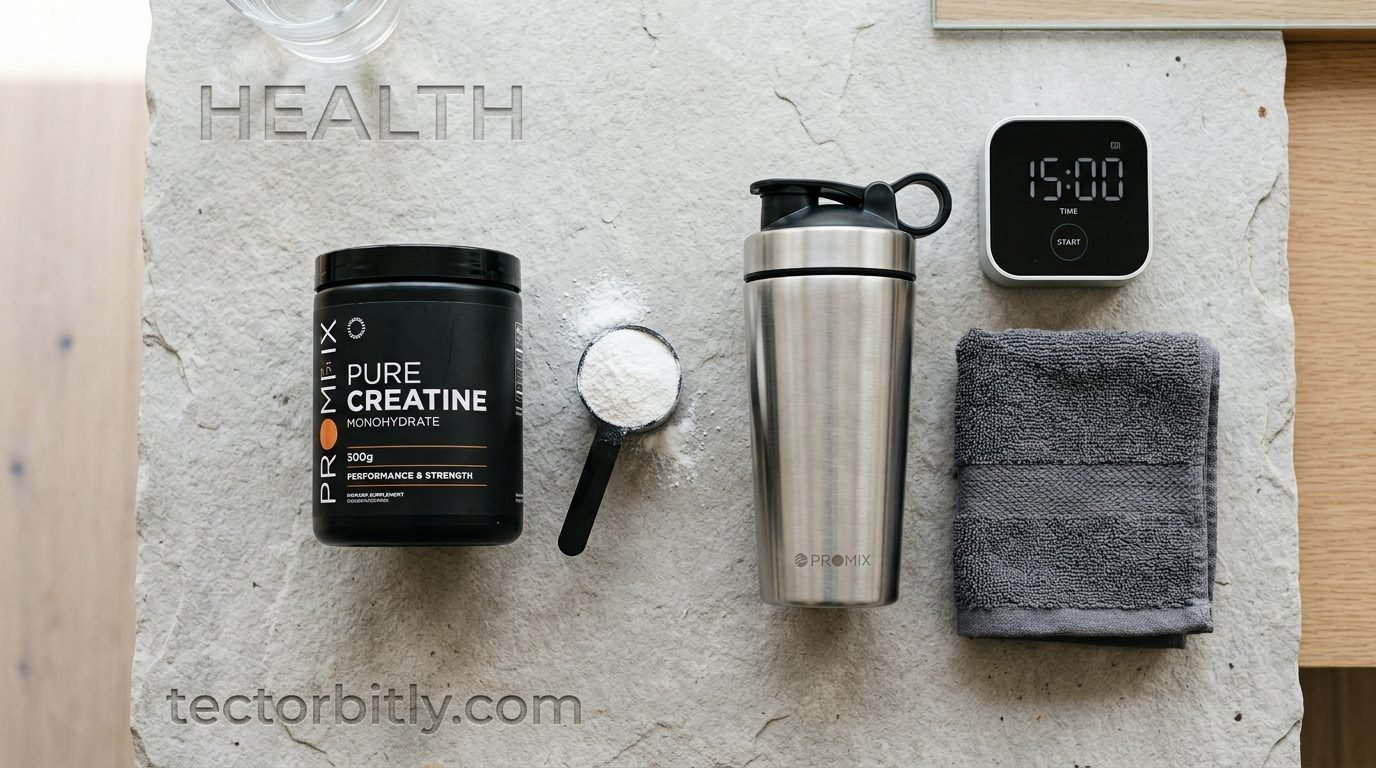
Do you need electrolytes on creatine?
No, and the reasoning behind the question is usually backwards.
Creatine pulls water into muscle cells. Total body water goes up, not down, which is why the scales move a few pounds in the first week. That is water retention in the useful sense, not the puffy sense, and it does not create a sodium deficit.
The International Society of Sports Nutrition's position stand on creatine found supplementation "either has no effect or reduces the incidence of musculoskeletal injury, dehydration, and/or muscle cramping" — the opposite of the warning that drives people to stack electrolytes on top of it.
So: drink normally. If you train hard in heat you need sodium, but you needed it because of the training and the heat, not the creatine. For the rest of the detail, see when to take creatine and creatine side effects.
Making your own electrolyte drink
The commercial formulas are not complicated, and the one with the strongest evidence behind it is a WHO recipe you can make from a kitchen cupboard.
Oral rehydration solution, home version:
| ingredient | amount |
|---|---|
| Clean water | 1 litre |
| Sugar | 6 level teaspoons |
| Salt | ½ level teaspoon |
The sugar is not there for flavour or energy — glucose and sodium are absorbed together through the same transporter in the gut wall, so the sugar is what makes the sodium absorb efficiently. Leave it out and you have made salty water that works less well.
Two honest limits. Measure carefully, because too much salt makes it worse rather than better. And for actual illness, especially in children, buy the sachets — they are cheap, precisely mixed, and this is not the place to approximate.
For everyday use rather than illness, a pinch of salt and a squeeze of citrus in water is a perfectly reasonable and much cheaper version of what the powders sell.
Does salt water hydrate you?
In small amounts, yes — that is what an ORS is. In large amounts, no. Seawater is roughly four times as salty as your blood, so processing it costs you more water than it provides. The dose is the entire distinction.
Sea salt and table salt are effectively identical for this purpose. Sea salt contains trace minerals in quantities too small to matter physiologically, and the premium is for texture and marketing.
What to look for on the label
If you do buy something, the useful number is sodium, and most of the market is underdosed for the job it claims to do.
- A sports drink is designed around carbohydrate for fuelling, with modest sodium. Fine during long exercise, unnecessary otherwise.
- An ORS is designed around sodium and glucose in the ratio that maximises absorption. This is what you want for illness or serious depletion.
- Coconut water is high in potassium and low in sodium — pleasant, but the wrong mineral for replacing sweat losses.
The technical terms on packaging describe concentration relative to blood. Hypotonic is more dilute than blood and absorbs fastest, which is what you want for pure rehydration. Isotonic matches blood and carries more carbohydrate. Hypertonic is more concentrated and is a fuelling product, not a hydration one.
On the common comparison: a rehydration solution like Pedialyte carries meaningfully more sodium and less sugar than a sports drink like Gatorade, which makes it the better choice for illness in adults as well as children. For a football match, the sports drink is the one designed for the job.
Can you have too many electrolytes?
Yes, in both directions, and this is the part the marketing never covers.
For healthy people the realistic risk is not toxicity but the opposite problem: drinking large volumes of plain water during prolonged sweating dilutes blood sodium, a condition called hyponatraemia. It is rare, it happens mainly in endurance events, and it has killed people. The early signs — nausea, headache, confusion — look enough like dehydration that the instinct is to drink more, which makes it worse.
The clearest warning sign is weight: if you finish a long event heavier than you started, you drank more than you lost.
Excess supplementation causes milder trouble. Too much sodium means thirst, bloating and raised blood pressure. Too much magnesium is a laxative, which is the most common electrolyte side effect people actually encounter. Genuine electrolyte imbalance symptoms severe enough to matter — persistent confusion, irregular heartbeat, muscle weakness — are a medical situation, not a supplement one.
If you have kidney disease or heart failure, or take diuretics or lithium, none of the general advice here applies to you. Ask your doctor.
Electrolytes in the morning and before bed
Neither timing has meaningful evidence behind it for ordinary people.
The morning version is popular because you wake mildly dehydrated after a night of breathing. That is true, and a glass of water fixes it. Adding electrolytes changes nothing unless you sweated heavily the day before and never replaced it.
Taking them before bed is usually aimed at night cramps, which brings us back to the cramp evidence above — thin. If it helps you, the likeliest explanation is that you were mildly under-hydrated and drank a glass of water at bedtime.
The exception in both cases is the same as everywhere else: if you train early in heat, or you finished a long session late, replacing sodium at those times is reasonable. The clock is not what makes it work.
The practical version
For an ordinary day, eating ordinary food: you do not need them. Water is enough, and the deficit the product is sold against does not exist.
Reach for electrolytes when one of these is true:
- You have been sweating hard for more than about an hour, especially in heat
- You are ill with vomiting or diarrhoea — and use a proper ORS sachet
- You are in the first week of keto, or an extended fast
- You are older, on diuretics, or otherwise told by a doctor to watch your sodium
Everything else is a preference, not a requirement. If you like the taste and it gets you drinking more, that is a perfectly good reason to buy it — just not a physiological one.
For the wider question of how much fluid you need in the first place, see how much water you actually need.


0 comments
No comments yet. Be the first to weigh in.